Traffic Sign Shapes And Meanings:DMV Permit Test Prep Guide

Before you even read a single word on a road sign, its shape has already told you something important. Understanding traffic sign shapes and meanings is one of the most overlooked yet essential skills tested on Virginia’s DMV permit exam, and it’s knowledge that could save your life long after you’ve passed.
At NOVA Driving School VA, we’ve helped thousands of Northern Virginia residents ace their permit tests with a 99 percent first-time pass rate. One pattern we’ve noticed? Students who memorize sign shapes, not just sign text, perform better under pressure. Why? Because at 55 mph, you can recognize a shape before you can read the words on it.
This guide breaks down every traffic sign shape you’ll encounter on the Virginia DMV knowledge test, explains what each one means, and shows you how to use shape recognition as a reliable backup when visibility is poor. Whether you’re a teen preparing for your learner’s permit or an adult brushing up before the exam, this is your complete reference for sign shape identification.
Why traffic sign shapes matter for safe driving
Your brain processes shapes faster than text, sometimes by as much as 60,000 times. This biological fact isn’t just interesting trivia. It’s the foundation of every traffic control system in America, including Virginia’s roads. When you’re driving at highway speeds, you have roughly 1.5 to 2 seconds to identify a sign, process its message, and respond appropriately. Shape recognition gives you that critical head start.
Recognition happens before reading
Shape serves as your first warning system when visibility drops. During heavy rain, fog, or nighttime driving, you might not read the words "STOP" until you’re dangerously close to an intersection. But that distinctive octagonal outline registers in your peripheral vision from over 500 feet away. This early recognition gives you extra seconds to slow down, check for cross traffic, and prepare to stop safely.
The Virginia DMV specifically tests shape recognition because it’s the fastest way to identify critical warnings when conditions deteriorate.
Recognizing traffic sign shapes and meanings by outline alone also protects you when signs are partially obscured by snow, dirt, or overgrown vegetation. Even if you can only see half the sign, that triangular or diamond shape tells you what category of information you’re receiving.
Universal language on the road
The shape system works across language barriers and literacy levels. Virginia’s roads serve diverse communities throughout Fairfax, Loudoun, Prince William, and Arlington counties. A driver who speaks limited English can still recognize that an octagon means stop, a triangle means yield, and a diamond warns of hazards ahead. This universal design principle keeps everyone safer regardless of their reading ability.
Virginia permit test questions intentionally include shape-based scenarios to verify you understand this backup system. You might see a question showing a faded sign where only the shape is visible, or a nighttime driving situation where shape is your only reliable identifier. Students who rely solely on memorizing sign text struggle with these questions, while those who’ve learned the shape system answer confidently and correctly.
The 8 key sign shapes and what they mean
Virginia’s DMV uses eight distinct shapes to categorize every sign you’ll encounter on the road. Each shape corresponds to a specific type of information or instruction, and mastering these shapes gives you an instant advantage during your permit test and behind the wheel.

The complete shape system
Learning traffic sign shapes and meanings through their geometric outlines creates a mental shortcut that works even when you can’t read the sign clearly. Here’s what each shape tells you:
| Shape | Meaning | Action Required |
|---|---|---|
| Octagon | Stop sign | Come to complete stop |
| Triangle (point down) | Yield | Slow and give right-of-way |
| Diamond | Warning | Reduce speed, stay alert |
| Vertical Rectangle | Regulatory | Follow the rule posted |
| Horizontal Rectangle | Guide/Information | Note direction or distance |
| Pentagon | School zone | Watch for children |
| Circle | Railroad crossing | Prepare to stop for trains |
| Pennant (triangle right) | No passing zone | Stay in your lane |
The octagon and triangle are the only two shapes used for traffic control signs in Virginia, making them instantly recognizable even at high speeds. Diamonds always warn you about upcoming road conditions like curves, merges, or animal crossings. Rectangles provide either rules you must follow (vertical) or helpful navigation information (horizontal).
Pentagon signs appear exclusively near schools and pedestrian crossings, making them Virginia’s most specific shape designation.
Pentagon signs deserve special attention because they signal the highest vulnerability zones on any road, where extra caution protects lives.
Common traffic sign colors and what they signal
Color works alongside shape to create a two-layer communication system on Virginia’s roads. While shape tells you the category of sign, color indicates the level of urgency and type of information you’re receiving. Your DMV permit test will include questions about both traffic sign shapes and meanings as well as color associations, so understanding this dual system gives you complete mastery.
The Virginia color code you need to know
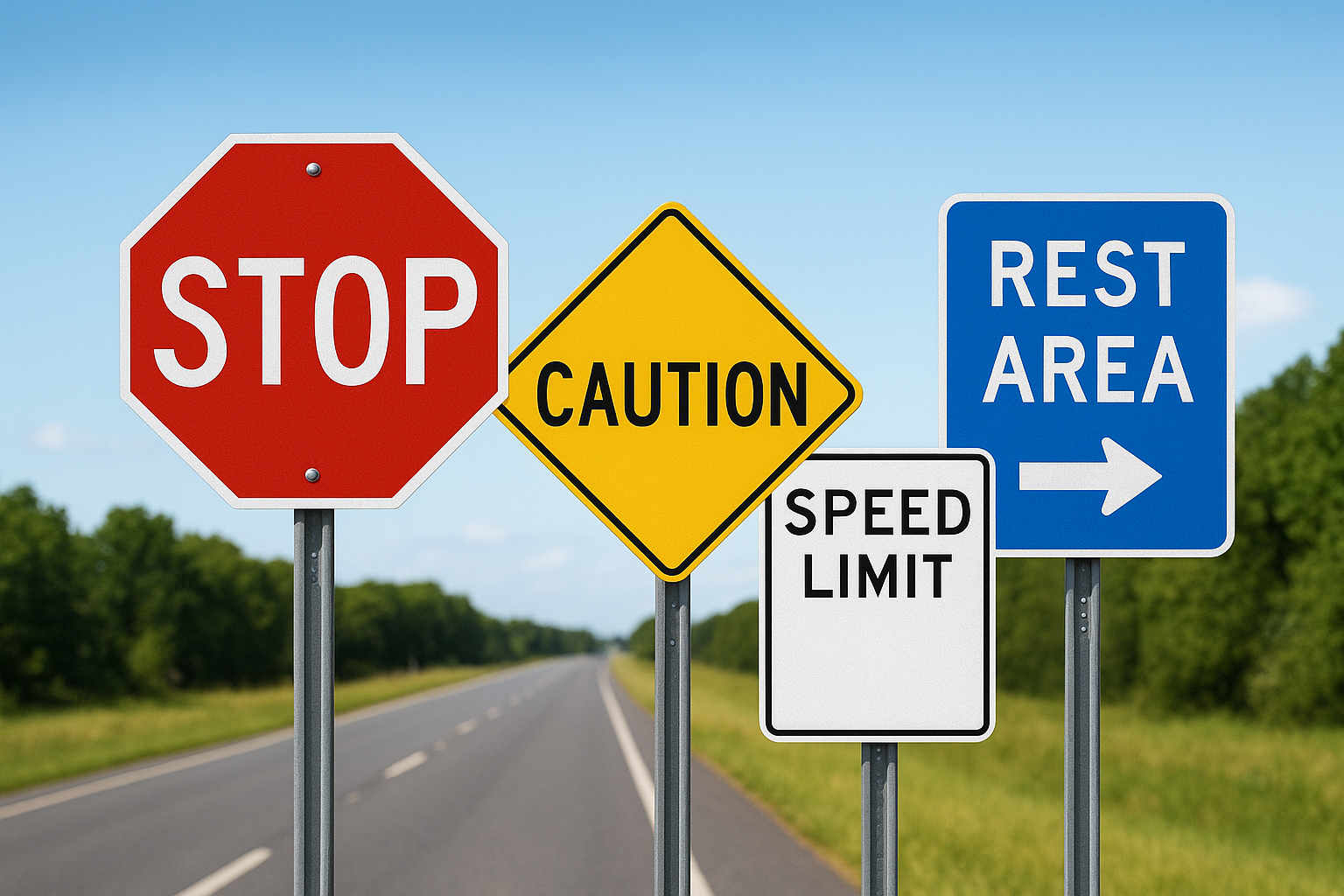
Each color carries a specific function that remains consistent across all road signs in the state. Red always demands your immediate attention for stop or prohibition commands. Yellow signals caution or warning about hazards ahead, giving you time to adjust your speed or lane position. White backgrounds appear on regulatory signs that tell you the rules, while green provides directional guidance to help you navigate.
Orange stands out as the only color reserved exclusively for temporary situations, marking construction zones and detours where normal traffic patterns don’t apply.
Black text or symbols appear on white, yellow, or orange backgrounds to maximize contrast and readability. Blue signs direct you to services and rest areas along your route, while brown points out recreational sites and tourist attractions. Knowing these color meanings helps you prioritize information instantly. A red sign requires action now, yellow means prepare for changes ahead, and blue or brown signs provide helpful context you can note without altering your driving behavior. This color hierarchy trains your brain to filter urgency levels automatically as you scan the roadway.
How to use shapes and colors on the DMV permit test
Virginia’s permit test includes multiple questions where shape and color recognition gives you the correct answer faster than trying to recall every specific sign. Your test strategy should prioritize shape identification first, then use color as your secondary confirmation. This approach works especially well on questions showing faded signs, partially visible signs, or nighttime scenarios where only the outline and background color remain clear.
Shape-first strategy for tricky questions
Test questions often present signs at angles or distances where the text becomes difficult to read intentionally. When you encounter these scenarios, scan for the shape before attempting to read any words. An octagon always means stop regardless of lighting conditions, and a downward-pointing triangle always requires you to yield. Diamond shapes signal warnings about road conditions ahead, so answers involving hazards, curves, or merges become immediately obvious once you identify that diamond outline.
Shape recognition eliminates wrong answers instantly, narrowing your choices to the correct response even when other details remain unclear.
Practice questions that show silhouettes or outlines prepare you for this exact testing method. Understanding traffic sign shapes and meanings through their geometric forms rather than memorizing text gives you confidence on test day.
Color clues when text is missing
Questions occasionally display signs where color remains visible but text has been obscured or removed. Red backgrounds or borders always indicate stop or prohibition commands, making it impossible for the correct answer to involve advisory information. Yellow backgrounds signal caution and warnings, so your answer should reflect preparing for hazards rather than following strict regulations. White backgrounds pair with regulatory signs that tell you rules you must follow, while green backgrounds always provide directional guidance to destinations.
Common road sign mistakes and easy memory aids
Students preparing for Virginia’s DMV permit test consistently confuse yield signs with warning signs because both use triangular shapes. The critical difference lies in orientation: yield signs point downward while warning signs (rare triangular warnings) point upward. Another frequent error involves mistaking horizontal rectangles for vertical ones, leading test-takers to treat informational guide signs as strict regulatory commands. These mix-ups cost points on test day and create dangerous habits behind the wheel.
Typical confusion patterns
The pentagon shape causes the most identification errors because students encounter it less frequently than other shapes. Many confuse school zone pentagons with warning diamonds, missing the five-sided distinction that signals pedestrian zones. Circular railroad crossing signs also trip up learners who mistake them for regulatory signs because circles seem similar to the prohibition symbol used internationally. Understanding traffic sign shapes and meanings requires recognizing that circles appear exclusively for railroad warnings in Virginia’s system, never for general traffic rules.
Shape orientation matters as much as the shape itself, since upward triangles warn while downward triangles command you to yield.
Memory tricks that work
Connect octagon with "eight sides for full stop" to lock in that relationship permanently. Remember that diamonds warn of dangers ahead by linking both words to the letter D. Pentagon signs protect people in pedestrian zones, creating a P-connection that sticks. For rectangles, picture vertical signs as standing authority figures giving orders, while horizontal rectangles lay flat like maps showing you directions and distances. These associations transform abstract shapes into memorable images your brain retrieves instantly during the test and on the road.

Next steps for safer driving
Mastering traffic sign shapes and meanings gives you confidence on your permit test and real-world driving skills that last a lifetime. You now understand how shapes communicate faster than text, how colors signal urgency levels, and how to use both systems together for instant recognition on Virginia’s roads. This knowledge becomes automatic with practice, transforming you into a driver who anticipates hazards and follows traffic laws instinctively.
Your next move should focus on applying these concepts behind the wheel under professional guidance. NOVA Driving School VA’s DMV-approved instructors reinforce sign recognition during every lesson, pointing out real examples as you drive through Northern Virginia’s diverse road conditions. Our behind-the-wheel training combines permit test prep with practical experience, ensuring you recognize shapes instantly when they matter most.
Ready to move beyond studying and start driving? Enroll in our driver education program and join the 99 percent of our students who pass their DMV test on the first attempt.

